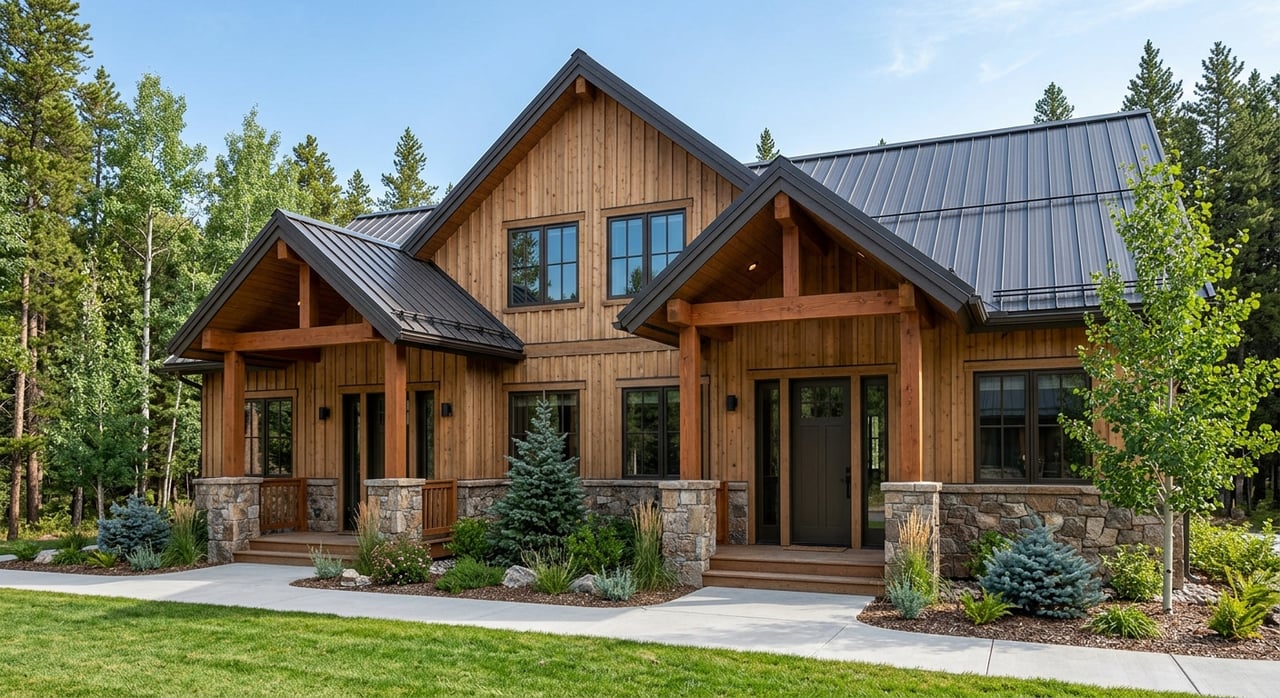
Thinking about buying a rental property in Victor or Driggs? You are not alone. These two Teton Valley markets attract attention for a simple reason: they sit near Jackson Hole while offering a different entry point for investors who want exposure to both workforce housing demand and seasonal visitor traffic. If you are weighing the numbers, the property types, and the rules, this guide will help you understand what matters most before you buy. Let’s dive in.
Why Victor and Driggs draw investors
Victor and Driggs benefit from a demand mix that is harder to find in many small mountain markets. On one side, you have year-round housing demand tied to local employment and Jackson-area commuting. On the other, you have tourism demand connected to Grand Teton National Park and the broader regional visitor economy.
That mix matters because it gives you more than one path to rental demand. Victor is a small city of more than 2,000 residents, while Driggs serves as Teton Valley’s main business center. The valley has about 13,000 residents, and local officials note that population can nearly double during peak summer season.
At the county level, the numbers help explain the investment interest. Teton County, Idaho had an estimated 13,254 residents in July 2025, 7,199 housing units, and an 80.8% owner-occupied rate. The Census reports a median gross rent of $1,319 and a median owner-occupied home value of $690,500, while Zillow currently pegs the county’s average home value at $864,221.
Long-term rental demand is real
The strongest long-term rental story in Victor and Driggs is workforce spillover from Jackson Hole. Regional housing research found that 77% of Teton County, Idaho employees live in their county of employment, and commuting from Teton County, Idaho to Jackson costs about $500 per month. In a market where low vacancy can mean units fill within days or even hours, that is a meaningful driver of steady demand.
Housing need is also substantial. Teton Valley Housing says the community needs between 1,165 and 1,580 homes by 2027, with at least 60% of them below market, just to meet workforce housing demand. For you as an investor, that points to a market where well-positioned long-term rentals can serve an active and ongoing need.
This does not mean every property will produce strong cash flow. It does mean demand exists, especially for homes that fit practical local housing needs. In this market, buying the right property often matters more than simply buying any property in the right zip code.
Tourism adds seasonal upside
Tourism creates a second layer of rental demand. Grand Teton National Park recorded 3,800,648 recreation visits in 2025, and the park is open year-round, with its busiest stretch from May through September. The National Park Service also reported that Grand Teton visitors contributed $597 million to gateway communities in 2022.
For Victor and Driggs, this supports seasonal lodging demand alongside year-round housing need. That can be attractive if you are considering a short-term rental strategy, a part-time personal-use property, or a condo or townhome that is easier to maintain. Still, seasonal revenue usually comes with more moving parts, and that is where many investors need to look beyond the top-line income.
Choose the right property type
Single-family homes
Single-family homes often line up best with the workforce and local-family renter pool. They are generally easier to finance and manage than more complex property types, and they often appeal to future owner-occupants when it is time to sell.
The tradeoff is pricing. In Teton County, Idaho, purchase prices can be high relative to local rents, which may compress your long-term rental yield. In practical terms, that means your numbers may work best when you buy well, renovate efficiently, or use conservative financing.
Small multifamily
Small multifamily properties can make sense if your focus is income and reducing vacancy risk. With more than one unit, you are not relying on a single lease to carry the entire property. That can be especially helpful in a market with a documented housing shortage.
You will want to pay close attention to timing and logistics. In Victor, building permit review is targeted at 15 business days, inspections are limited to regular business days, and new public utility connections are generally limited to April 15 through October 15 because of climate. If your strategy involves renovation or development, those details can affect your timeline.
Condos and townhomes
Condos and townhomes are often attractive because they can be more maintenance-light. That can be a real advantage if you live elsewhere, want less exterior upkeep, or plan to use the property seasonally.
They can also work for short-term rental use, but only if several layers of rules line up. In this category, you need to review city requirements, tax obligations, and any recorded covenants or HOA restrictions. Victor specifically notes that these private restrictions are enforceable and recommends getting a compliance letter before work starts.
Understand yield expectations
If you are investing in Victor or Driggs, it helps to go in with realistic expectations. Based on local rent and value data, long-term rental yields may be modest on an unlevered basis. The gap between home values and rents suggests this is not always a market where traditional long-term rentals produce high cap rates.
That does not mean the investment case is weak. It means your strategy needs to fit the market. Some investors value long-term appreciation potential, lifestyle flexibility, or the ability to serve a strong workforce housing segment. Others may look at short-term rental income to improve gross revenue, while understanding that operating costs are usually higher.
Seasonal rentals can increase revenue, but they also bring additional expenses. Furnishings, cleaning, guest turnover, local taxes, and management all affect your bottom line. If you underwrite a short-term rental here, make sure you model the full operating picture, not just occupancy and nightly rate.
Victor short-term rental rules to know
If you are buying inside Victor city limits and plan to operate a short-term rental, the city requires a business license before operation. Victor states that a separate license is required for each rental property, and licenses are renewed annually.
Victor also says short-term rentals are subject to a 6% room occupancy tax. Taxes are due monthly by the 20th of the following month. If you use a platform such as Airbnb or VRBO, the city says you need documentation showing the platform is collecting and remitting the taxes.
The city also notes that licenses may include property inspections. That makes pre-purchase due diligence especially important if you are buying a property that you plan to place into short-term rental service soon after closing.
Driggs short-term rental rules to know
Driggs has its own short-term rental framework, and the details matter. The city requires a short-term rental permit for any stay under 30 days. The initial permit fee is $80, and the renewal fee is $50.
Permits are approved for one year and must be renewed by March 1. Driggs also requires an annual report, garbage service, a valid permit posted on site, and a local representative within 20 miles. The city says its lodging tax is currently 6% and rises to 8% on January 1, 2026.
If you live out of the area, that local representative requirement is especially important. It is one more reason many absentee owners need strong local systems in place before they start renting.
Idaho lodging tax basics
At the state level, Idaho’s State Tax Commission says lodging rented for 30 days or less is subject to state sales tax and the 2% travel and convention tax. Stays longer than 30 continuous days are not subject to the travel and convention tax.
The state also notes that marketplace platforms may handle tax collection for some hosts, but owners still need to confirm their filing obligations. If your plan includes short-term rentals, tax setup should be part of your early due diligence, not an afterthought.
Why local management matters
In Victor and Driggs, rental ownership is rarely passive. Winter weather, seasonal demand shifts, maintenance coordination, and local compliance all require attention. For short-term rentals, that can include tax remittance, guest turnover, snow response, and on-the-ground problem solving.
In Driggs, the local representative requirement makes that need even more concrete. In both markets, strong local management can help protect your asset, support compliance, and improve the guest or tenant experience. If you are buying from out of area, management planning should happen at the same time as property selection.
A smart way to evaluate an opportunity
Before you buy, focus on a few core questions:
- Is this property better suited for long-term or short-term use?
- Do city rules allow the rental strategy you want?
- Are there HOA or covenant restrictions that affect use?
- Does the rent potential support your purchase price and financing?
- Will renovation, permitting, or utility timing affect your plan?
- Do you have a local management solution if you will not be nearby?
In Victor and Driggs, success often comes from matching the property to the market. A single-family home may be the clearest workforce-rental play. A small multifamily property may provide more resilient income if zoning and utilities cooperate. A condo may work well for seasonal income only when the permit, tax, and project rules all line up.
Final thoughts on investing here
Victor and Driggs are best understood as a Teton Valley alternative to Jackson, not as a simple low-friction rental market. The opportunity is real, but it is shaped by limited supply, workforce housing pressure, tourism demand, and very specific local rules. If you approach the market with clear underwriting and property-level due diligence, you can make more confident decisions.
If you are exploring investment property in Teton Valley and want local guidance on inventory, property fit, and market context, connect with The McPeak Group. Their team brings deep regional knowledge across Jackson Hole and Teton Valley to help you evaluate opportunities with clarity.
FAQs
What makes Victor and Driggs appealing for rental property investment?
- Victor and Driggs attract investors because they combine year-round workforce housing demand with seasonal tourism demand tied to the Grand Teton region.
What type of rental property works best in Victor and Driggs?
- It depends on your strategy, but single-family homes often fit long-term workforce demand well, small multifamily can reduce vacancy risk, and condos or townhomes may work for seasonal use if local rules and project restrictions allow.
What are the short-term rental rules in Victor, Idaho?
- Victor requires a business license for each short-term rental property, annual renewal, and compliance with a 6% room occupancy tax that is due monthly.
What are the short-term rental rules in Driggs, Idaho?
- Driggs requires a permit for stays under 30 days, annual renewal by March 1, an annual report, garbage service, a posted permit, and a local representative within 20 miles.
Are long-term rental returns in Teton County, Idaho high?
- Local price and rent data suggest long-term rental yields may be modest, so careful underwriting and the right acquisition price are important.
Do Idaho lodging taxes apply to short-term rentals in Victor and Driggs?
- Yes, Idaho says lodging rented for 30 days or less is generally subject to state sales tax and the 2% travel and convention tax, in addition to applicable local taxes.