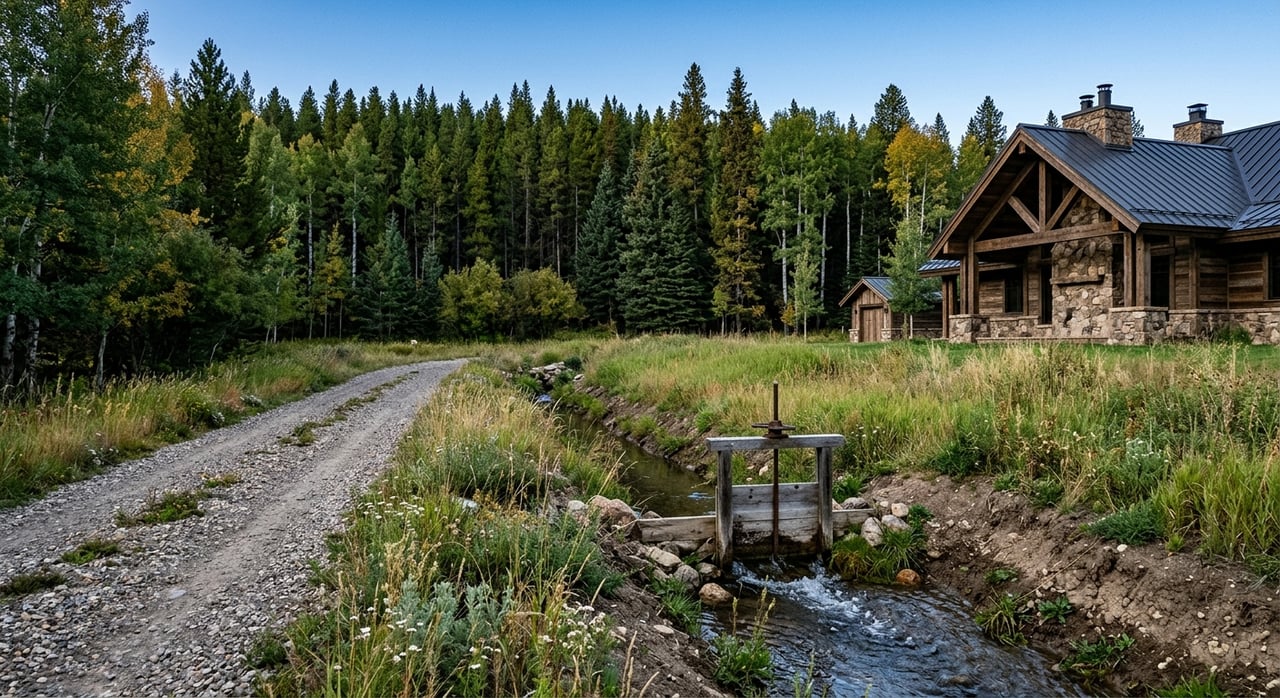
Dreaming of more elbow room, a barn, a few horses, or simply a quieter place to land within reach of Jackson? Alpine and Star Valley draw buyers for exactly that reason. You get a more rural setting, access to public land, and a strong connection to the broader Jackson Hole lifestyle, but land here comes with details that matter. If you are considering acreage in the Hoback-to-Alpine corridor or deeper into Star Valley, this guide will help you focus on the questions that shape value, use, and long-term satisfaction. Let’s dive in.
Why Buyers Look South of Hoback
For many buyers, the appeal starts with geography. As US-89 runs south from Hoback Junction through Snake River Canyon to Alpine, you move into an acreage corridor that offers more space while staying connected to Jackson. According to the Town of Alpine, Alpine sits at the meeting point of the Greys, Salt, and Snake Rivers and is about 36 miles from Jackson Hole.
That location matters if you want a property that feels rural but still benefits from the Jackson orbit. The town also notes that many people who work in Jackson live in Alpine. In practical terms, that makes Alpine and nearby Star Valley a real option for buyers who want land, privacy, and mountain access without being in town every day.
Star Valley adds to that appeal with sheer scale. Travel Wyoming describes it as a 45-mile-long valley along the Wyoming-Idaho border, while the Bridger-Teton National Forest highlights the Star Valley Front stretching nearly 60 miles along Highway 89 from Salt Pass to Alpine. For you as a buyer, that often means more room to choose between homesites, agricultural ground, and larger ranch properties.
What Land Looks Like Here
One of the biggest mistakes buyers make is assuming all acreage in Alpine and Star Valley works the same way. It does not. A platted lot in town, a five-acre parcel with shared irrigation, and a larger working property can each come with very different rules, costs, and expectations.
Lincoln County’s 2022 agricultural census profile helps frame the range. The county counted 605 farms, with an average farm size of 489 acres and 66,977 irrigated acres. The farm-size distribution included many properties in the 10 to 49 acre and 50 to 179 acre ranges, along with larger 1,000-plus-acre operations.
That matters because your search may include both lifestyle acreage and true production land. Some properties are best suited for a home, shop, and open space. Others may involve irrigation systems, agricultural use patterns, and operational considerations that deserve a deeper review before you write an offer.
Alpine Lots vs Rural Acreage
Inside town limits, the process is typically more structured. The Town of Alpine planning and zoning page shows that subdivision standards, access, drainage, and utility review are part of the local planning framework. That can create a more predictable setup for buyers looking at in-town lots or smaller parcels.
Outside town, the equation changes. You may be dealing with a well, septic, private road access, irrigation delivery, and different maintenance responsibilities. That is not a bad thing, but it does mean rural acreage should be evaluated on its own terms rather than compared to a standard residential lot.
Water Rights Deserve Early Attention
If you only investigate one issue early, make it water. In Wyoming, water follows the doctrine of prior appropriation, and the State Engineer’s Office administers water resources and permits. Older rights generally have priority, which can affect how and when water is delivered or used.
Just as important, you should never assume that visible irrigation automatically means the water right transfers with the property. The University of Wyoming small acreage irrigation guide explains that water rights are tied to the legal land description, not simply to a subdivision lot number, and they may belong to someone else.
On smaller acreages, irrigation is often part of a shared system. That may involve a ditch company, a corporation, an HOA, or another shared diversion structure. If land has been subdivided, the guide also notes that severing water rights requires approval from the State Engineer or Board of Control, so this is never something to guess at.
Wells and Groundwater Questions
If a parcel is not on municipal water, you will want to understand the groundwater picture. The Wyoming State Engineer FAQ states that most new wells and other groundwater appropriations require a permit before construction. That makes early verification essential, especially if you are planning to build.
The same source recommends checking e-Permit or the county clerk’s office to confirm what rights are attached to a parcel. In other words, water is not just a utility box to check. It is a property rights issue that can directly affect how you use the land.
Winter Access Is a Real Buying Factor
A beautiful driveway in July can feel very different in January. Alpine reports average annual snowfall of about 500 inches on its visitor information page, so winter access should be part of your initial screening, not an afterthought.
Within town, Alpine’s FAQ says Public Works handles snow removal and that plowing is based on snowfall of 4 inches or more. The town’s planning process also asks for site plan details such as vehicular access, drainage, septic or sewer locations, and snow storage. That gives you a sense of how seriously local officials treat winter conditions.
Outside town, the road question becomes even more important. A parcel may sit off a county road, private easement, or HOA-maintained route, and each setup can affect access and carrying costs. The research also notes that WYDOT’s snowplow priority system gives higher-volume roads more service, while lower-volume routes may receive less intensive treatment or face seasonal limitations.
Utilities Can Vary by Parcel
Utility assumptions can get buyers in trouble, especially when moving from in-town property to rural acreage. Alpine’s Public Works page shows that the town processes water connection forms, sewer connection forms, well permits, bulk water permits, impact fees, and encroachment permits through its portal. The same source also notes that Alpine has adopted a rule prohibiting the extension of water and sewer services outside town limits.
That is a major distinction. If you are buying outside town, you should confirm the actual combination of electric service, propane, well, septic, and road maintenance before you move forward. Even when electric service is broadly available, the details still matter at the parcel level.
For example, Wyoming 211’s listing for Lower Valley Energy shows service in both Lincoln County and Teton County. That is helpful regional context, but it does not replace verifying the exact service point, meter requirements, and connection logistics for the property you are considering.
Your First Due Diligence Checklist
When you are comparing land or ranch properties in Alpine and Star Valley, start with the issues that most often affect daily use and ownership costs.
- Confirm whether the parcel has recorded water rights.
- Ask who manages the ditch, irrigation delivery, or diversion system.
- Verify whether the road is public, county, HOA, or private.
- Find out who plows the road and driveway in a heavy snow year.
- Determine whether the parcel is served by municipal water and sewer or relies on well and septic.
- Review any covenants, livestock limits, outbuilding rules, or agricultural-use restrictions.
- Measure how far the driveway sits from the winter-maintained road.
- Check whether the site has enough space for plowing and snow storage.
These are not minor details. They shape how the property functions year-round and can affect both convenience and long-term value.
Lifestyle Still Drives the Search
Even with all the due diligence, the lifestyle is still the reason many buyers look here in the first place. The region supports fishing, hiking, horseback riding, camping, winter recreation, and access to the Snake River corridor and nearby public lands. The Bridger-Teton National Forest’s Star Valley Front recreation page is a useful snapshot of the outdoor access that helps define this part of Wyoming.
That combination of space and recreation is what makes land living in Alpine and Star Valley so compelling. You can find a property that supports your day-to-day life while still staying connected to the places and experiences that draw people to the Jackson Hole area in the first place.
How to Shop Smarter in This Market
The smartest buyers here blend vision with discipline. It is easy to focus on views, a creek, or a meadow, but the best purchase decisions usually come from matching the land to your actual goals. If you want a homesite, your checklist may center on access, utilities, and buildability. If you want agricultural use or larger-scale acreage, water rights and operational details rise to the top.
This is also a market where local knowledge pays off. The difference between an easy property and a complicated one may not be obvious from photos or acreage alone. Asking the right questions early can save time, reduce surprises, and help you compare properties on the factors that really matter.
If you are exploring land or ranch opportunities from Hoback to Alpine and throughout Star Valley, working with a team that understands both the lifestyle side and the practical side can make your search far more efficient. The McPeak Group brings local market perspective and hands-on guidance to buyers looking for the right fit in this unique part of the region.
FAQs
What makes Alpine and Star Valley appealing for land buyers near Jackson?
- Alpine and Star Valley offer more space, a more rural setting, and strong access to outdoor recreation while remaining connected to the broader Jackson Hole area.
What should you verify first when buying acreage in Alpine or Star Valley?
- Start with water rights, road access and plowing responsibility, utility setup, septic or sewer service, and any covenants or land-use restrictions.
Why do water rights matter for land in Alpine and Star Valley?
- Water rights can determine how land may be irrigated or used, and visible ditches or irrigation features do not automatically mean those rights transfer with the property.
How does winter access affect land purchases near Alpine?
- Heavy snowfall can affect road access, plowing costs, driveway usability, and snow storage, so you should confirm maintenance responsibilities before buying.
Are utilities the same on every parcel in Alpine and Star Valley?
- No. Some properties may have municipal services, while others rely on a combination of electric service, propane, well water, septic systems, and private road arrangements.